Author: Admin

  • Canada Holds First CEC Draw of the Year, Issuing 1,350 Invitations

    Canada Holds First CEC Draw of the Year, Issuing 1,350 Invitations

    Canada has conducted its first Canadian Experience Class (CEC) draw of 2025. The draw, which took place on January 8, issued 1,350 Invitations to Apply (ITAs) to candidates eligible under the CEC program. The minimum Comprehensive Ranking System (CRS) score required for this draw was 542, marking a competitive threshold for applicants.

    Details Of The Draw

    Date Draw Type Number of ITAs Cut-off CRS Score
    8-Jan Canadian Experience Class 1,350 542

    This draw follows the Provincial Nominee Program (PNP) draw that took place on January 7 in which 471 candidates were invited with a minimum CRS score of 793. These draws signify a gradual increase in activity after a slow December during which fewer ITAs were issue.

    A Step Towards Meeting Immigration Goals

    The Canadian Experience Class (CEC) is an immigration program under Canada’s Express Entry system, which is designed for skilled workers who have gained work experience in Canada and want to become permanent residents. It recognizes the value of Canadian work experience as a key factor for successful integration into Canadian society and the economy.

    Under the Levels Plan for 2025, the Immigration, Refugees, and Citizenship Canada (IRCC) will emphasize the “In-Canada Focus” allocation, prioritizing candidates already residing in Canada. This includes applicants from the Canadian Experience Class (CEC) and Provincial Nominee Program (PNP), with the potential to invite candidates from two additional Express Entry programs. Additionally, the “Federal Economic Priorities” allocation will focus on candidates who align with Canada’s labour market and demographic goals. These individuals will be selected through category-based invitations within the Express Entry system, ensuring a strategic approach to addressing the country’s economic needs.

    IRCC has also changed the groups that it will prioritize under category-based selections. 

    The priority categories this year include:

    • – Healthcare occupations;
    • – Trades occupations; and
    • – French-language proficiency.

    Understanding the CRS Score Threshold

    The Comprehensive Ranking System (CRS) score is a points-based mechanism used to assess and rank candidates in the Express Entry pool. Factors such as age, education, work experience, language proficiency, and adaptability are considered in determining an individual’s score.

    For this draw, the CRS cut-off score was set at 542, reflecting the competitive nature of the pool and the high qualifications of candidates. Those who received ITAs can now proceed to submit their applications for permanent residence, taking them one step closer to achieving their goal of settling in Canada.

  • Canada Conducts First Express Entry Draw of 2025, Issuing 471 PR Invitations

    Canada Conducts First Express Entry Draw of 2025, Issuing 471 PR Invitations

    The Immigration, Refugees and Citizenship Canada (IRCC) has started the year 2025 on a positive note by conducting its first Express Entry draw on January 7. In this draw, 471 candidates received Invitations to Apply (ITAs) for permanent residence. This marks a promising beginning for the new year, with the draw specifically targeting candidates aligned with the Provincial Nominee Program (PNP).

    Details Of The Draw

    Date Draw Type Number of ITAs Cut-off CRS Score
    7-Jan-25 Provincial Nominee Program 471 793

    This draw is the first Express Entry selection of the year and follows 2 PNP draws and a French language proficiency draw in December. Last December, the immigration department issued a total of 2,561 ITAs to candidates.

    Understanding the CRS Score Threshold

    The minimum CRS score of 793 in this draw reflects the additional points awarded to PNP nominees. Candidates who receive a provincial nomination automatically gain 600 CRS points, significantly boosting their ranking in the Express Entry system. Without the provincial nomination, the base CRS score for these candidates would have been 193.

    The Provincial Nominee Program (PNP)

    The PNP allows provinces and territories in Canada to nominate individuals who have the skills, education, and work experience to contribute to their local economy. This program plays a vital role in addressing regional labor shortages and supporting community development.

    Candidates in the Express Entry pool who are nominated by a province not only enhance their chances of receiving an ITA but also demonstrate strong ties to the province that nominated them. This alignment ensures a smoother integration into the local workforce and community upon arrival in Canada.

    The first Express Entry draw of 2025 highlights Canada’s continued commitment to leveraging immigration as a tool for economic development and regional prosperity. For prospective immigrants, staying informed about program changes and preparing competitive applications will be key to successfully navigating the Express Entry system in the months ahead.

  • Canada’s Passport Ranking 2025: A Mark of Global Mobility

    Canada’s Passport Ranking 2025: A Mark of Global Mobility

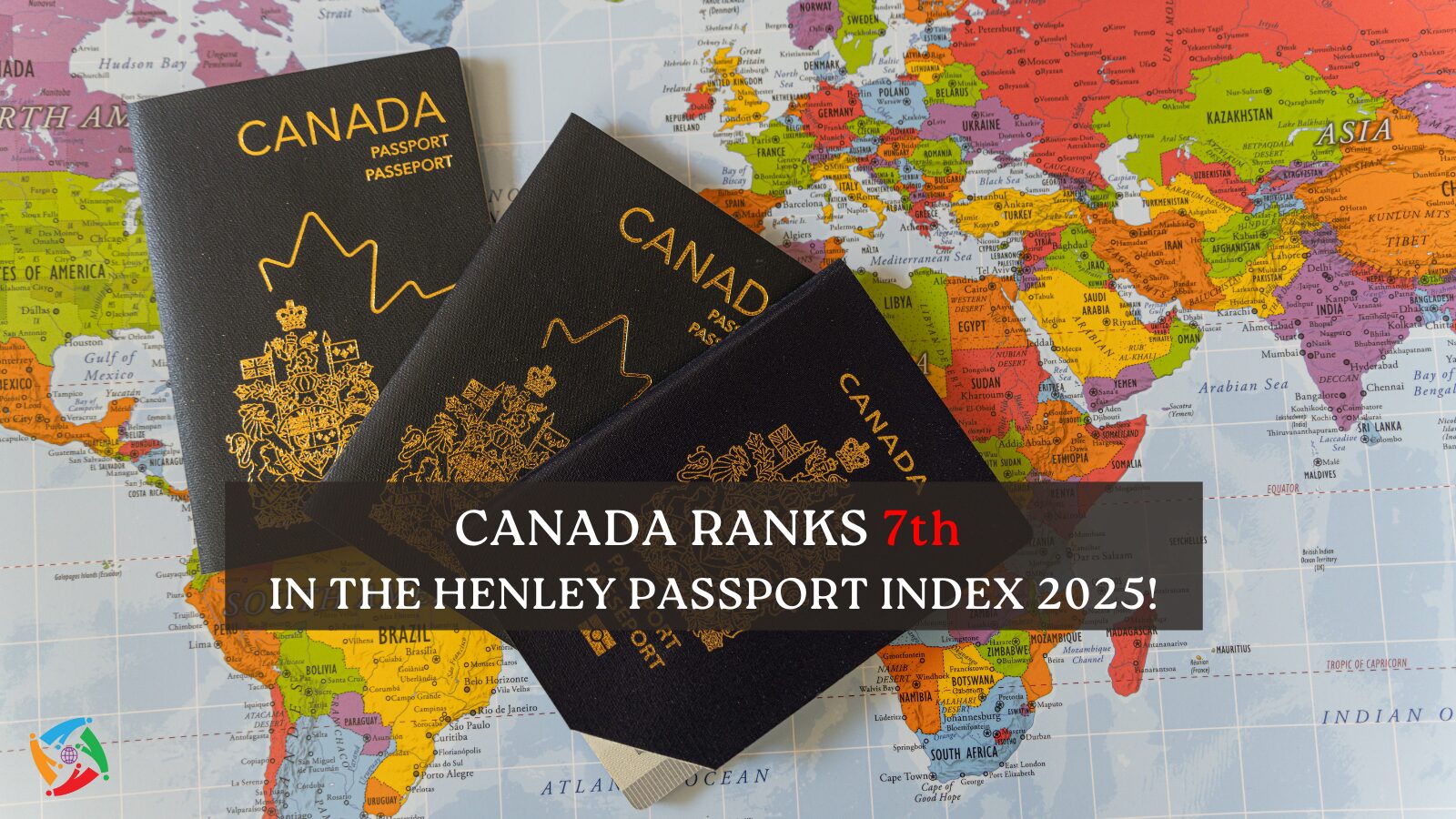
    In the latest Henley Passport Index released for 2025, Canada has once again proven its status as a global leader in travel freedom. Tying at 7th position worldwide, the Canadian passport is recognized as one of the most powerful travel documents, offering its holders unparalleled access to the world.

    What Makes the Canadian Passport Stand Out?

    The Henley Passport Index, a globally respected ranking system, evaluates the strength of passports based on the number of destinations their holders can access without requiring a visa or by obtaining a visa on arrival. This year, the Canadian passport provides entry to an impressive 188 countries and territories, showcasing its enhanced global reach and trustworthiness.

    Global Comparisons

    Ranked alongside other top-tier passports, Canada’s position at number 7 reflects its diplomatic relations, international agreements, and reputation for fostering global partnerships. It places Canada ahead of many other developed nations and underscores the privilege and convenience enjoyed by Canadian citizens when traveling abroad.

    Benefits of a Strong Passport

    Having a passport that ranks so highly brings significant advantages to Canadian citizens:

    • Ease of Travel: With visa-free or visa-on-arrival access to 188 destinations, Canadians can explore the world with minimal bureaucratic hurdles.

    • Time and Cost Savings: Avoiding the need for lengthy visa application processes saves both time and money.

    • Enhanced Opportunities: Whether for tourism, business, or education, the freedom to travel widely opens doors to diverse opportunities.

    While Canada’s position in the Henley Passport Index is commendable, it also serves as a reminder of the importance of maintaining strong international ties and fostering global mobility. With travel resuming and expanding post-pandemic, the power of the Canadian passport is more relevant than ever, highlighting the privilege and responsibility of being a global citizen.

  • Canada Agri-Food Pilot: 1,010 New Applications To Be Accepted in 2025

    Canada Agri-Food Pilot: 1,010 New Applications To Be Accepted in 2025

    The Canada Agri-Food Pilot (AFP), a groundbreaking initiative aimed at addressing labor shortages in the agriculture and food processing sectors, is set to accept 1,010 new applications in 2025. Launched in May 2020, this pilot program has been a cornerstone of Canada’s immigration strategy, targeting essential industries that are vital to the country’s economic and food security.

    Overview of the Agri-Food Pilot Program

    The Agri-Food Pilot was designed to attract experienced, non-seasonal workers who can contribute to the long-term growth and stability of Canada’s agri-food industry. It provides a pathway to permanent residency (PR) for eligible workers employed in specific industries and occupations.

    With a total annual cap of 2,750 principal applicants, the program is highly competitive and tailored to meet the unique needs of the agri-food sector.

    Key features of the pilot include:

    • – Targeted eligibility criteria focusing on specific occupations like farm supervisors, livestock workers, butchers, and food processing laborers.
    • – Industry-specific support to address chronic labor shortages in meat processing, mushroom production, greenhouse operations, and livestock farming.

    Permanent residency pathways for workers committed to settling in Canada and contributing to its agri-food economy.

    Updates for 2025

    For 2025, the Immigration, Refugees and Citizenship Canada (IRCC) has announced significant changes to the program’s application intake. This program will accept a reduced cap of 1,010 applications, a significant decrease from the 2,750 applications accepted in 2024. This adjustment is due to high demand and aligns with the targets established in Canada’s 2025–2027 Immigration Levels Plan. Applications will be accepted until May 14th, 2025, or until the cap is reached, whichever comes first.

    To qualify for the program, applicants must meet the following criteria:

    1. Work Experience: A minimum of one year (full-time, non-seasonal) in an eligible occupation within the past three years.

    2. Job Offer: A full-time, non-seasonal job offer in Canada outside of Quebec.

    3. Language Proficiency: A minimum Canadian Language Benchmark (CLB) of 4 in English or French.

    4. Education: At least a high school diploma or an equivalent foreign credential.

    5. Settlement Funds: Proof of sufficient funds to support themselves and their families unless already employed in Canada.

    Application Categories

    The Canada Agri-Food Pilot allows applications under specific job categories that align with the needs of the agri-food sector. For 2025, applications will be accepted in the following categories:

    1. Meat Processing
      • – Industrial butchers
      • – Meat cutters
      • – Supervisors in meat processing plants
    2. Greenhouse, Nursery, and Floriculture Production
      • – General farm workers
      • – Harvesting laborers
    3. Animal Production
      • – General farm workers
      • – Farm supervisors and specialized livestock workers
  • Trudeau Announces His Resignation From Liberal Leadership

    Trudeau Announces His Resignation From Liberal Leadership

    Canadian Prime Minister Justin Trudeau has announced his resignation as leader of the Liberal Party, a position he has held since 2013, and as Prime Minister, a role he assumed in 2015. This decision comes amid declining public support, internal party conflicts, and significant economic challenges facing the country.

    Trudeau emphasized the need for new leadership to navigate Canada’s current challenges and to provide Canadians with a clear choice in the forthcoming elections. He stated his intention to remain in office until the Liberal Party selects a new leader, a process expected to take between 60 to 90 days. To facilitate this transition, Trudeau has advised Governor General Mary Simon to prorogue Parliament until March 24, 2025, effectively suspending parliamentary activities during this period.

    Trudeau’s tenure has been marked by significant achievements, including progressive policies on gender equality, climate change, and Indigenous rights. However, his administration also faced controversies and criticisms, such as the SNC-Lavalin affair, perceived policy inconsistencies, and challenges in addressing economic issues like housing affordability and inflation.

    Impacts on immigration

    Trudeau’s tenure was marked by progressive immigration policies, including increased immigration targets and support for refugees. His departure introduces uncertainty regarding the future direction of Canada’s immigration system. The new Liberal leader’s stance on immigration will be pivotal, as will the positions of opposition parties, particularly the Conservatives, who have previously advocated for more stringent immigration controls.

    Prorogation of Parliament:

    The suspension of Parliament until March 24 delays legislative activities, including those related to immigration. This hiatus may postpone the introduction or amendment of immigration policies and could affect the processing of immigration applications, potentially leading to delays for applicants.

    While Trudeau’s resignation marks a significant shift in Canadian politics, the direct impact on immigration policies will depend on his successor’s agenda and the political dynamics in Parliament post-prorogation.

  • Pathways To Permanent Residency In Canada With A Low CRS Score

    Pathways To Permanent Residency In Canada With A Low CRS Score

    Canada remains one of the most popular destinations for immigrants worldwide, offering numerous opportunities for skilled workers, entrepreneurs, and families. However, obtaining permanent residency (PR) can be challenging, especially for applicants with a low Comprehensive Ranking System (CRS) score. Fortunately, there are several pathways to achieve Canadian PR even if your CRS score is not high.

    1. Provincial Nominee Programs (PNPs)

    Provincial Nominee Programs (PNPs) are among the most effective ways to secure PR with a low CRS score.

    Each Canadian province operates its own PNP, allowing them to select candidates that meet their specific labor market needs. There are two types of PNPs: base PNPs and enhanced PNPs.

    Type of PNP Requirements What candidate can receive if successful Processing time for PR
    Base -Meet PNP requirements. Nomination Certificate 12 months.
    Enhanced -Meet PNP requirements.
    -Having a valid Express Entry Profile.
    600 additional CRS points to be added in Express Entry Profile. 6 months.
    • Base PNP:

      • – Operates independently of the federal Express Entry system.
      • – Candidates apply directly to the province and, if nominated, apply for permanent residence through the regular process.
      • – Processing times are typically longer than Express Entry streams.
      •  
    • Enhanced PNP:

      • – Linked to the Express Entry system.
      • – Candidates must first create an Express Entry profile and indicate interest in provincial nomination.
      • – Provinces can search the Express Entry pool and invite candidates directly.
      • – Nominated candidates receive 600 additional CRS (Comprehensive Ranking System) points, almost guaranteeing an Invitation to Apply (ITA) for permanent residency.

    2. Consider Atlantic Immigration Program (AIP)

    The Atlantic Immigration Program (AIP) targets skilled workers and international graduates seeking to settle in Canada’s Atlantic provinces: Nova Scotia, New Brunswick, Prince Edward Island, and Newfoundland and Labrador. A job offer from a designated employer in these regions can lead to permanent residency without relying heavily on CRS scores.

    Apply Through Family Sponsorship

    If you have a family member who is a Canadian citizen or permanent resident, you may qualify for family sponsorship programs. Spousal, parental, and dependent sponsorship pathways bypass the CRS system entirely, offering a more straightforward route to PR.

    Immigration Pilots

    The Canadian government runs some immigration pilots, which also provide pathways to permanent residence for eligible foreign nationals.

    Agri-Food Immigration Pilot

    Supports workers in Canada’s agri-food sector.

    • Targeted Occupations
      • – Meat processing, farm supervisors, harvesting laborers.
    • Requirements:
      • – 1 year of non-seasonal work experience.
      • – Job offer required.
      • – Language requirement (CLB 4).

    The government has also announced its intention to launch a new caregiver program pilot, but has not yet released details on eligibility or when this program is expected to launch.

    Tips to Increase Your Chances:

    • Job Offer: Secure a job offer from a Canadian employer.
    • – Language Improvement: Retake IELTS/CELPIP to improve language scores.
    • – Education: Gain additional certifications or credentials.

    A low CRS score does not mean the end of your dream to become a Canadian permanent resident. By exploring alternative pathways like PNPs, regional programs, and family sponsorship, you still can increase your chances of success.

  • Breaking News: No New Applications for Parents and Grandparents Program in 2025

    Breaking News: No New Applications for Parents and Grandparents Program in 2025

    In a significant announcement, the Government of Canada has confirmed that the Parents and Grandparents Program (PGP) will not be accepting new applications in 2025. This decision marks a temporary pause in one of Canada’s key family reunification initiatives, affecting thousands of hopeful families seeking to bring their loved ones to Canada.

    About the Parents and Grandparents Program

    The Parents and Grandparents Program allows Canadian citizens and permanent residents to sponsor their parents and grandparents for permanent residence. The program has been a cornerstone of Canada’s immigration framework, aiming to promote family reunification and provide support systems for immigrants.

    Reasoning Behind the Decision

    IRCC has cut the permanent resident targets by 20% for 2025. Part of this cut also included a reduction in the allocation for landings under the PGP.

    The 2025 target is 24,500 landings for foreign nationals sponsored through the PGP.

    In the earlier Immigration Levels Plan, IRCC had set targets of 32,000 for 2024, and 34,000 for 2025.

    Impact on Applicants

    Families who were planning to submit applications in 2025 will need to explore alternative pathways for bringing their parents and grandparents to Canada. Options such as the Super Visa, which allows extended temporary visits for up to five years at a time, remain available. The government has reassured families that the Super Visa program will continue to operate without interruption.

    The temporary suspension of new applications for the Parents and Grandparents Program in 2025 reflects ongoing efforts to enhance the immigration system’s efficiency. While this may delay reunification plans for some families, the government’s commitment to managing current applications and expanding alternative options remains steadfast. For those affected, keeping up to date with announcements from Immigration, Refugees and Citizenship Canada will be essential.

  • New Rules For International Students In Canada For The Year 2025

    New Rules For International Students In Canada For The Year 2025

    Canada has introduced several new regulations affecting international students, effective from late 2024 and into 2025. These changes aim to balance educational opportunities with labor market needs and ensure the integrity of the immigration system. The key updates are as follows:

    1. Updated Post-Graduation Work Permit (PGWP) Eligibility Criteria:

    • Effective Date: November 1, 2024
    •  
    • Details: International students applying for a PGWP must meet new eligibility requirements, which vary based on the submission date of their study permit application and their program of study.
    •  
    • For Study Permit Applications Submitted On or After November 2024:
    •  
      • + University Graduates (Bachelor’s, Master’s, or Doctoral Degrees):
        • * Language Requirement: Minimum Canadian Language Benchmark (CLB) 7 in all language skills.
        • * Field of Study: No restrictions; all fields are eligible.
        •  
      • + Graduates from Other University Programs:
        • * Language Requirement: Minimum CLB 7.
        • * Field of Study: Must be in a high-demand area in Canada.
        •  
      • + College Graduates or Other Programs:
        • * Language Requirement: Minimum CLB 6.
        • * Field of Study: Must be in a high-demand area.
        •  
    • Purpose: These changes are designed to align educational outcomes with Canada’s labor market needs, ensuring that graduates possess the necessary language skills and qualifications for in-demand occupations.

    2. Updated Off-Campus Work Hour Limitations:

    • Effective Date: November 2024
    •  
    • Details: International students are now permitted to work up to 24 hours per week off-campus during academic sessions, an increase from the previous limit of 20 hours per week.
    •  
    • Purpose: This adjustment aims to provide students with greater financial flexibility while ensuring they remain focused on their studies.

    3. Termination of the Student Direct Stream (SDS):

    • Effective Date: November 2024
    •  
    • Details: The Student Direct Stream (SDS) and Nigeria Student Express (NSE) visa programs have been terminated.
    •  
    • Purpose: There are concerns about vulnerabilities and fairness led to its discontinuation. By terminating these programs, IRCC aims to create a more level playing field for all applicants and reduce exploitation within the system.

    4. Changes to Spousal Open Work Permits:

    • Effective Date: November 2024
    •  
    • Details: New regulations have been introduced regarding the eligibility and application process for spousal open work permits.

    The eligibility is now limited to spouses of students enrolled in professional degree programs at a university, such as a master’s or doctorate program:

    • – Dental Surgery Doctor (DDS, DMD)
      – Juris Doctor or Bachelor of Law (LLB, JD, BCL)
      – Medical doctor (MD)
      – Doctor of Pharmacy (PharmD, BS, BSc, BPharm), Doctor of Optometry (OD)
      – Veterinary medicine doctor (DVM)
      – Nursing Bachelor of Science (BScN, BSN, or BNSc)
      – Education Bachelor’s Degree (B. Ed.)
      – Engineering Bachelor’s Degree (B. Eng., BE, BASc)

    Purpose: These adjustments aim to ensure that spousal work permits are issued in alignment with Canada’s labor market requirements and immigration objectives.

    5. Restrictions on Study Permit Applications at Ports of Entry:

    • Effective Date: November 2024
    •  
    • Details: International students are now required to apply for study permits prior to arriving in Canada, as applications at ports of entry are no longer accepted.
    •  
    • Purpose: This change is intended to enhance the integrity of the study permit issuance process and ensure proper vetting of applicants.

    End of Flagpoling for PGWP Applications

    Effective Date: June 21, 2024

    Details: The practice known as “flagpoling,” where students temporarily exit and re-enter Canada to process immigration applications at the border, has been discontinued.

    • Purpose: This measure seeks to reduce inefficiencies and enhance oversight within the immigration system.

    These regulatory updates reflect Canada’s commitment to maintaining a robust and fair immigration system that supports both international students and the country’s economic needs. Prospective and current international students should familiarize themselves with these changes to ensure compliance and to make informed decisions regarding their studies and employment in Canada.

  • Ontario PNP Reached Annual Quota For 2024

    Ontario PNP Reached Annual Quota For 2024

    As of December 23, 2024, the Ontario Immigrant Nominee Program (OINP) has successfully met its annual nomination quota, issuing all 21,500 nominations allocated by the federal government for this year.

    Implications for Applicants:

    Application Processing: New and existing applications will now be processed under the 2025 allocation. Prospective candidates can continue to submit Expressions of Interest (EOIs) across the program’s primary streams, including the Employer Job Offer and Human Capital categories.

    Selection Process: The OINP will maintain its merit-based selection, evaluating EOIs based on a scoring system and conducting draws to determine cut-off scores. Express Entry candidates may receive Notifications of Interest (NOIs) based on their Comprehensive Ranking System (CRS) scores across various streams.

    2024 OINP Highlights:

    Invitations to Apply (ITAs): The Employer Job Offer: International Student stream led with 8,363 ITAs, followed by the Employer Job Offer: Foreign Worker stream with 6,695 ITAs. The Masters Graduate stream also saw significant activity, issuing 5,519 ITAs.

    Notifications of Interest (NOIs): Under the Human Capital Priorities stream, 12,731 NOIs were issued, while the Skilled Trades stream accounted for 9,006 NOIs.

    Looking Ahead to 2025:

    The federal government’s revised immigration targets indicate a substantial reduction in the Provincial Nominee Program (PNP) allocations for 2025. The national PNP quota is expected to decrease by 50%, from 110,000 in 2024 to 55,000 in 2025. Consequently, Ontario’s allocation may drop to approximately 10,747 nominations, aligning with 2022 levels.

    Applications interested in OINP should expect increased competition and higher cutoff threshholds in 2025 as Ontario adjusts to the reduces federal targets.

  • Flagpoling for Work and Study Permits Officially Ended, Effective Dec 23rd, 2024

    Flagpoling for Work and Study Permits Officially Ended, Effective Dec 23rd, 2024

    Effective December 23, 2024, at 11:59 pm ET, the Government of Canada has officially ended the practice of “flagpoling” for obtaining work and study permits at ports of entry.

    What Is Flagpoling?

    Flagpoling refers to the practice where foreign nationals temporarily exit Canada—often by visiting the United States or St. Pierre and Miquelon—and then re-enter to access immigration services at a Canadian port of entry. This method allowed individuals to obtain or renew work and study permits more quickly than applying through standard in-country processes.

    Reason For Being Discontinued?

    The Canadian Border Services Agency (CBSA) reported processing over 69,300 flagpoling cases between April 1, 2023, and March 31, 2024, predominantly in the Pacific, Southern Ontario, and Quebec regions. This high volume consumed significant resources and diverted border officers from essential enforcement duties, contributing to increased wait times for cross-border travelers.

    Minister of Public Safety, the Honourable David J. McGuinty, stated, “This change will enable us to further streamline activities at our ports of entry and allow Canadian and American border officers to focus on what they have been expertly trained to do—border enforcement.”

    Implications for Applicants

    With the termination of flagpoling, individuals already in Canada must now submit applications and renewals for work or study permits through Immigration, Refugees and Citizenship Canada (IRCC). Online applications are expected to experience longer processing times, potentially up to 6 months.