Category: GTR Immigration

  • What’s Next for Canada’s Immigration System?

    What’s Next for Canada’s Immigration System?

    The newly elected Liberal government under Prime Minister Mark Carney is implementing significant reforms to Canada’s immigration system, aiming to balance economic growth with housing availability, infrastructure capacity, and public sentiment. Here’s an overview of the key changes:​

    1. Reduced Permanent Resident Targets

    The government has revised its permanent resident admission targets downward:​

    • 2025: 395,000 (down from the previously planned 500,000)

    • 2026: 380,000

    • 2027: 365,000​

    This reduction is intended to alleviate pressure on housing and public services, allowing for more manageable population growth. ​

    2. Cap on Temporary Residents

    For the first time, Canada is implementing a cap on temporary residents, including international students and foreign workers. The goal is to reduce their proportion from 7.2% of the population in July 2024 to 5% by the end of 2026. This equates to a reduction of approximately 445,000 temporary residents annually over the next two years. ​

    3. Prioritizing Transitions from Temporary to Permanent Residency

    The government plans to have over 40% of new permanent residents come from individuals already in Canada on temporary permits. These individuals are often already integrated into Canadian society, which can ease the transition and reduce additional demands on housing and services. ​

    4. Increased Francophone Immigration Outside Quebec

    To support the growth of Francophone communities outside Quebec, the government is increasing its targets for French-speaking immigrants:​

    • 2025: 8.5% of total admissions

    • 2026: 9.5%

    • 2027: 10%​

    This initiative aims to bolster the vitality of Francophone minority communities across the country. ​

    Additional Measures

    • – Deploying digital tools to speed up application processing and reduce backlogs;
    • – Expanding legal aid services for asylum seekers;
    • – Tightening Visa requirements and strengthen border security;
    • – Continuing immigration policy collaboration with the Government of Quebec.
  • New PR Pathway: Thunder Bay Reveals Eligible Occupations

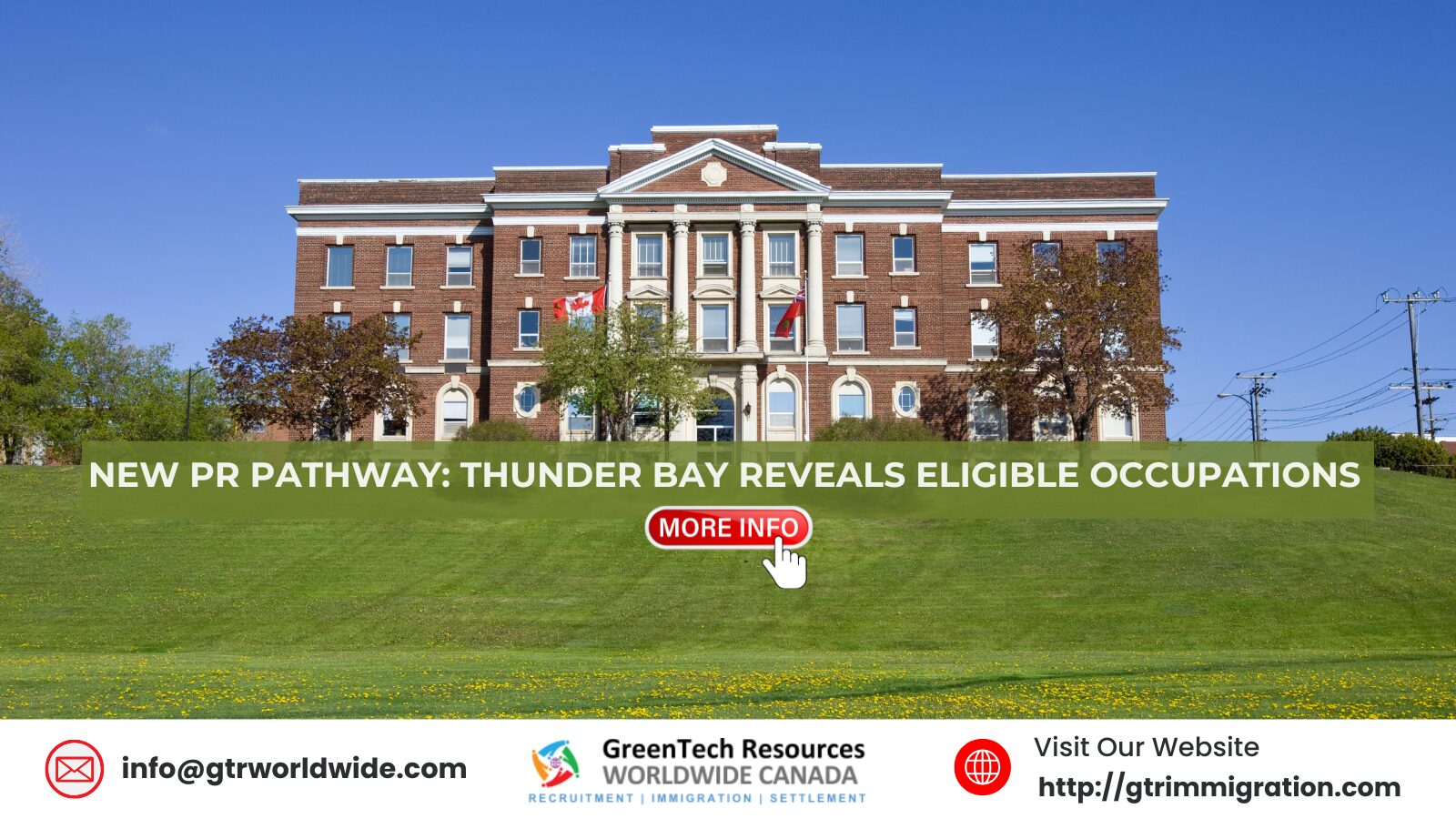
    New PR Pathway: Thunder Bay Reveals Eligible Occupations

    Thunder Bay, Ontario, has unveiled its list of eligible occupations under the new Rural Community Immigration Pilot (RCIP), a program designed to attract skilled foreign workers to address labor shortages in smaller Canadian communities. This initiative offers a pathway to permanent residency (PR) for individuals who secure job offers from designated employers in Thunder Bay.

    Key Employment Sectors and Eligible Occupations

    The Thunder Bay Community Economic Development Commission (CEDC) has identified five primary sectors with high demand for skilled workers:​

    1. 1. Business and Finance Administration

      • Administrative Assistants (NOC 13110)

      • Financial Advisors (NOC 11102)

      • General Office Support Workers (NOC 14100)​

      2. Healthcare

      • Registered Nurses and Registered Psychiatric Nurses (NOC 31301)

      • Licensed Practical Nurses (NOC 32101)

      • Nurse Aides, Orderlies, and Patient Service Associates (NOC 33102)

      • Pharmacy Technical Assistants and Pharmacy Assistants (NOC 33103)

      • Kinesiologists and Other Professional Occupations in Therapy and Assessment (NOC 31204)​

      3. Education, Law, Social, Community, and Government Services

      • Early Childhood Educators and Assistants (NOC 42202)

      • Home Support Workers, Caregivers, and Related Occupations (NOC 44101)

      • Social and Community Service Workers (NOC 42201)

      • Social Workers (NOC 41300)

      • Therapists in Counselling and Related Specialized Therapies (NOC 41301)​

      4. Sales and Service

      • Cooks (NOC 63200)

      • Food Counter Attendants, Kitchen Helpers, and Related Support Occupations (NOC 65201)

      • Food Service Supervisors (NOC 62020)

      • Light Duty Cleaners (NOC 65310)

      • Retail and Wholesale Trade Managers (NOC 60020)

      • Retail Sales Supervisors (NOC 62010)

      • Retail Salespersons and Visual Merchandisers (NOC 64100)

      • Store Shelf Stockers, Clerks, and Order Fillers (NOC 65102)​

      5. Trades, Transport, Equipment Operators, and Related Occupations

      • Automotive Service Technicians, Truck and Bus Mechanics, and Mechanical Repairers (NOC 72410)

      • Construction Millwrights and Industrial Mechanics (NOC 72400)

      • Construction Trades Helpers and Labourers (NOC 75110)

      • Heavy Equipment Operators (NOC 73400)

    About RCIP

    The RCIP is an employer-driven program, meaning that foreign nationals cannot apply directly. Instead, designated employers in Thunder Bay must initiate the application process by submitting a candidate’s profile to the CEDC for community recommendation. Currently, the list of designated employers has not been released, but updates are expected as the program progresses.

    Eligibility Criteria

    To qualify for PR under the RCIP, candidates must:

    • – Secure a valid job offer from a designated employer in Thunder Bay.
    • – Have at least one year (1,560 hours) of relevant work experience within the past three years.
    • – Demonstrate language proficiency through an approved English or French language test.
    • – Possess a Canadian educational credential or its foreign equivalent.
    • – Provide proof of sufficient settlement funds for themselves and their family members.​

    Special considerations may apply for healthcare workers and international graduates from local institutions, potentially offering exemptions or adjusted criteria.

  • Find Out If You Qualify for Express Entry’s STEM Pathway

    Find Out If You Qualify for Express Entry’s STEM Pathway

    If you’re a STEM professional aiming for Canadian permanent residency through Express Entry, recent updates to the STEM category in 2025 could significantly impact your eligibility. Here’s a comprehensive guide to help you determine if you qualify:​

    Express Entry STEM Category: Overview

    Canada’s Express Entry system introduced category-based draws to address specific labor market needs. The STEM category targets professionals in science, technology, engineering, and mathematics fields, offering them a streamlined pathway to permanent residency. Notably, STEM-specific draws often have lower Comprehensive Ranking System (CRS) score requirements compared to general draws.

    Eligibility Criteria for the STEM Category

    To qualify for the STEM category under Express Entry, you must:

    1. Meet Core Express Entry Requirements:

    • – Be eligible for one of the three federal immigration programs:
        • Federal Skilled Worker Program (FSWP)

        • Canadian Experience Class (CEC)

        • Federal Skilled Trades Program (FSTP)

    • – Have a valid Express Entry profile. ​
    •  
    • 2. Possess Relevant Work Experience:

    • – Accumulate at least 6 months of continuous full-time (or equivalent part-time) paid work experience within the last 3 years.
    • – Experience can be gained in Canada or abroad.
    • – Work must align with an eligible STEM occupation as defined by the National Occupation Classification (NOC) codes. ​
    •  
    • 3. Match Your Occupation to Eligible NOC Codes:

      • – Visit the Government of Canada’s NOC website to identify the NOC code corresponding to your job title.

      • – Ensure your job duties closely match those listed under the NOC’s lead statement and main responsibilities.

    Updated STEM Occupations List for 2025

    In 2025, the STEM category underwent significant changes, with 19 occupations removed and 6 new ones added. Some of the current eligible occupations include:​

    • Civil Engineers (NOC 21300)

    • Mechanical Engineers (NOC 21301)

    • Electrical and Electronics Engineers (NOC 21310)

    • Software Developers (NOC 21232)

    • Cybersecurity Specialists (NOC 21220)

    • Industrial and Manufacturing Engineers (NOC 21321)

    • Geological Engineers (NOC 21331)

    • Civil Engineering Technologists and Technicians (NOC 22300)

    • Mechanical Engineering Technologists and Technicians (NOC 22301)

    • Electrical and Electronics Engineering Technologists and Technicians (NOC 22310)

    • Insurance Agents and Brokers (NOC 63100)

    CRS Score Advantage

    One of the significant benefits of the STEM category is the potential for lower CRS score requirements. For instance, while general draws in 2024 required CRS scores between 524–549, STEM-specific draws had cutoffs as low as 491, inviting thousands of candidates.

    Steps to Determine Your Eligibility

    1. Identify Your NOC Code:

      • Use the NOC website to find the code matching your job title.​

    2. Verify Job Duties:

      • Ensure your work experience aligns with the main duties and responsibilities listed under the identified NOC code.​

    3. Assess Work Experience Duration:

      • Confirm you have at least 6 months of continuous full-time (or equivalent part-time) experience in the identified occupation within the last 3 years.​

    4. Evaluate Express Entry Program Eligibility:

      • Determine if you meet the criteria for FSWP, CEC, or FSTP.

  • New PR Pathway: Brandon and Sault Ste. Marie Select Focus Industries

    New PR Pathway: Brandon and Sault Ste. Marie Select Focus Industries

    Two Canadian communities—Sault Ste. Marie in Ontario and Brandon in Manitoba—have recently announced their priority sectors under the new Rural Community Immigration Pilot (RCIP), a federal initiative launched in January 2025 to facilitate permanent residency for skilled workers in rural areas.

    Sault Ste. Marie: Priority Sectors for 2025

    Sault Ste. Marie has been allocated 300 RCIP spots for 2025 and has identified the following priority sectors:​

    • Education, Law & Social, Community & Government Services

    • Healthcare

    • Sales & Service

    • Manufacturing & Utilities

    • Trades & Transport

    While specific in-demand occupations have not yet been detailed, these sectors reflect the city’s focus on essential services and skilled trades to support regional development.

    Brandon: Priority Sectors and Occupations for 2025

    Brandon has been allocated 180 RCIP spots for 2025, with 15% dedicated to the healthcare sector. The city has specified priority sectors and corresponding occupations, along with their National Occupation Classification (NOC) codes and minimum Canadian Language Benchmark (CLB) requirements:​

    Education, Law & Social, Community & Government Services:

    • Early Childhood Educators and Assistants (NOC 42202) – CLB 5​

    Healthcare:

    • – Dentists (NOC 31110) – CLB 6
    • – General Practitioners and Family Physicians (NOC 31102) – CLB 6
    • – Licensed Practical Nurses (NOC 32101) – CLB 5
    • – Nurse Aides, Orderlies and Patient Service Associates (NOC 33102) – CLB 5
    • – Registered Nurses and Registered Psychiatric Nurses (NOC 31301) – CLB 6
    • – Specialists in Clinical and Laboratory Medicine (NOC 31100) – CLB 6
    • – Specialists in Surgery (NOC 31101) – CLB 6​

    Brandon’s emphasis on healthcare and early childhood education highlights the city’s commitment to strengthening essential community services.

    About the RCIP

    The Rural Community Immigration Pilot (RCIP) is an employer-driven pathway to permanent residence in Canada. To be eligible, candidates must secure a job offer from a designated employer approved by an economic development organization in a participating community. The program aims to attract skilled workers to rural areas facing labor shortages, supporting regional economic growth.

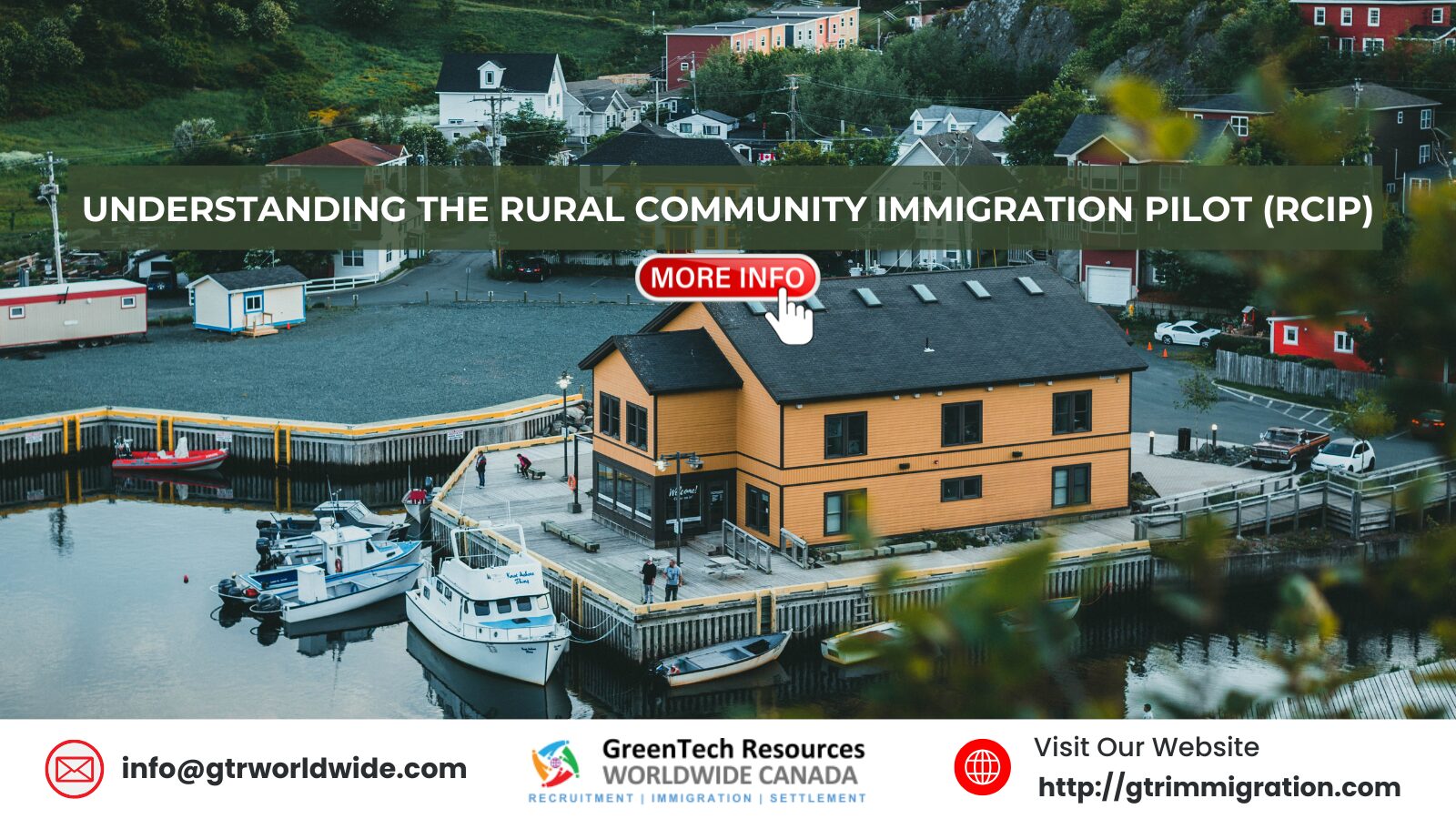
  • Understanding the Rural Community Immigration Pilot (RCIP)

    Understanding the Rural Community Immigration Pilot (RCIP)

    The Rural Community Immigration Pilot (RCIP) is a strategic initiative designed to attract skilled immigrants to rural and smaller communities in Canada. Recognizing the unique challenges these communities face—such as population decline, labor shortages, and the outmigration of youth—the RCIP aims to support sustainable economic growth and demographic balance by encouraging newcomers to settle and build their lives outside major urban centers.

    What Is the RCIP?

    The RCIP is a community-driven immigration program that gives participating rural communities the ability to directly recommend candidates for permanent residence. This localized approach allows communities to identify specific labor market needs and attract immigrants whose skills and experience align with local job opportunities.

    The pilot is modeled after the success of similar programs such as the Rural and Northern Immigration Pilot (RNIP) and aligns with Canada’s broader immigration goals.

    Key Features of the RCIP

    • Community-Driven Process: Local employers and community organizations are actively involved in identifying labor needs and supporting the integration of newcomers.

    • Permanent Residency Pathway: Successful candidates receive a community recommendation, enabling them to apply for Canadian permanent residency through Immigration, Refugees and Citizenship Canada (IRCC).

    • Tailored Support Services: Approved applicants can access various settlement services to ease their transition into Canadian life. These services include assistance with finding employment, language training, enrolling children in school, and connecting with community resources.

    Who Is Eligible?

    To qualify for the RCIP, applicants must:

    • – Have a valid, full-time, non-seasonal job offer from a designated employer in a participating community.
    • – Possess at least one year (1,560 hours) of related work experience in the past three years.
    • – Meet language proficiency requirements based on the National Occupational Classification (NOC) TEER category of the job offer.
    • – Hold a Canadian secondary school diploma or an equivalent foreign credential.
    • – Demonstrate sufficient funds to support themselves and their family, unless already working in Canada under a valid work permit.
    • – Intend to reside in the community offering the job.
    • – Obtain a community recommendation from the local economic development organization .​

    International graduates from public post-secondary institutions in the participating communities may be exempt from the work experience requirement if they meet specific criteria .

    Benefits for Communities and Immigrants

    For communities, the RCIP helps fill labor shortages in key sectors such as healthcare, agriculture, transportation, and hospitality. It also brings cultural diversity and new perspectives to regions that may otherwise struggle to maintain population growth.

    For immigrants, the program offers a pathway to permanent residency in a supportive, tight-knit environment with strong community ties and affordable living. It’s an excellent opportunity for individuals and families looking to escape the high costs and congestion of major urban centers.

    Participating Communities

    Fourteen communities across Canada have been selected for the RCIP:

    • British Columbia: Peace Liard, West Kootenay, North Okanagan Shuswap

    • Alberta: Claresholm

    • Saskatchewan: Moose Jaw

    • Manitoba: Steinbach, Altona/Rhineland, Brandon

    • Ontario: North Bay, Sudbury, Timmins, Sault Ste. Marie, Thunder Bay

    • Nova Scotia: Pictou County​

    Each community collaborates with local economic development organizations to identify labor gaps, designate employers, and recommend candidates for permanent residence .​

    Application Process

    1. Secure a Job Offer: Obtain a job offer from a designated employer in one of the participating communities.

    2. Community Recommendation: The employer submits your application for community recommendation.

    3. Apply for Permanent Residence: Upon receiving the recommendation, apply online through the Permanent Residence (PR) Portal.

    4. Pay Fees: Application fees start from $1,525, excluding additional costs for biometrics, medical exams, and police certificates.

    5. Submit Supporting Documents: Provide all necessary documents, including proof of funds, language test results, educational credentials, and police certificates

  • How Job Offers Boost Canadian PR Chances Without Express Entry Points

    How Job Offers Boost Canadian PR Chances Without Express Entry Points

    As of March 25, 2025, Immigration, Refugees and Citizenship Canada (IRCC) has removed the allocation of Comprehensive Ranking System (CRS) points for job offers within the Express Entry system. Previously, candidates could receive an additional 50 or 200 points for a valid job offer, depending on the position’s classification. This change aims to enhance the integrity of the immigration process by reducing the incentive for fraudulent job offers and misuse of Labour Market Impact Assessments (LMIAs) .​

    Despite the removal of CRS points for job offers, such offers remain significant for Canadian Permanent Residency (PR) applications. Here’s why:​

    1. Eligibility for Specific Immigration Programs

    Certain immigration streams still require a valid job offer as part of their eligibility criteria. These include:

    • – Federal Skilled Trades Program (FSTP)
    • – Federal Skilled Worker Program (FSWP)
    • – Provincial Nominee Programs (PNPs)

    For instance, many PNPs have streams that necessitate a job offer from an employer in the respective province or territory. A valid job offer can make candidates eligible for these programs, which can lead to PR

    2. Pathway to Canadian Work Experience

    Securing a job offer can facilitate obtaining a work permit, allowing candidates to gain Canadian work experience. This experience is valuable in the Express Entry system, as it contributes to CRS points under the core human capital factors. For example, one year of Canadian work experience can add 35 to 40 points, depending on marital status .​

    3. Provincial Nominee Programs (PNPs)

    Many PNPs prioritize candidates with job offers in their province or territory. A nomination through a PNP adds 600 points to a candidate’s CRS score, virtually guaranteeing an invitation to apply for PR. Thus, a job offer can be instrumental in obtaining a provincial nomination .​

    4. Demonstrating Economic Integration

    A job offer indicates that a candidate has the skills and qualifications needed in the Canadian labor market. This can strengthen the overall PR application by showcasing the candidate’s potential for economic integration and contribution to Canada’s economy.​

    In summary, while job offers no longer contribute directly to CRS points in the Express Entry system, they continue to play a crucial role in the Canadian immigration landscape by:

    • – Enabling eligibility for specific immigration programs.
    • – Facilitating the acquisition of Canadian work experience.​
    • – Enhancing prospects within Provincial Nominee Programs.
    • – Demonstrating a candidate’s potential for economic integration.​

    Therefore, obtaining a valid job offer remains a valuable asset for individuals seeking Canadian permanent residency.

  • New Brunswick Stops Accepting Applicants for Atlantic Immigration Program

    New Brunswick Stops Accepting Applicants for Atlantic Immigration Program

    As of April 4, 2025, New Brunswick has paused its intake for the Atlantic Immigration Program (AIP) for the remainder of the year, having reached its annual cap of 1,250 endorsements. Consequently, no new endorsement applications or employer designations will be accepted for the rest of 2025. However, applications submitted on or before April 4 will continue to be processed. ​

    Despite New Brunswick’s pause, the AIP remains active in the other Atlantic provinces: Newfoundland and Labrador, Nova Scotia, and Prince Edward Island. These provinces are still accepting endorsement applications from designated employers, as they have not yet reached their respective allocations for the year.

    Key Details

    • Application Cutoff: Applications submitted before April 4, 2025, will continue to be processed. ​

    • Employer Designations: No new employers will be designated under the AIP in New Brunswick for the rest of 2025.​

    • Other Immigration Streams: This pause does not affect other immigration pathways in New Brunswick, such as the NB Skilled Worker Stream, NB Express Entry Stream, and NB Strategic Initiative Stream, which remain open.

    How the Atlantic Immigration Program Works

    The AIP is an employer-driven immigration pathway designed to address labor market needs in Atlantic Canada. It facilitates the hiring of skilled foreign workers and international graduates by designated employers in the region. The general process involves:

    1. Employer Designation: Employers must first become designated by the province.​

    2. Job Offer and Settlement Plan: Once designated, employers can offer jobs to eligible candidates and work with them to develop a settlement plan.​

    3. Endorsement Application: The employer submits an endorsement application to the provincial government, including the job offer and settlement plan.​

    4. Provincial Endorsement: If approved, the province issues a Certificate of Endorsement to the candidate.​

    5. Permanent Residency Application: With the endorsement, the candidate can apply to Immigration, Refugees and Citizenship Canada (IRCC) for permanent residency.

    Under the AIP, applicants can legally work in Canada while awaiting a decision on their PR application by applying for a temporary work permit.

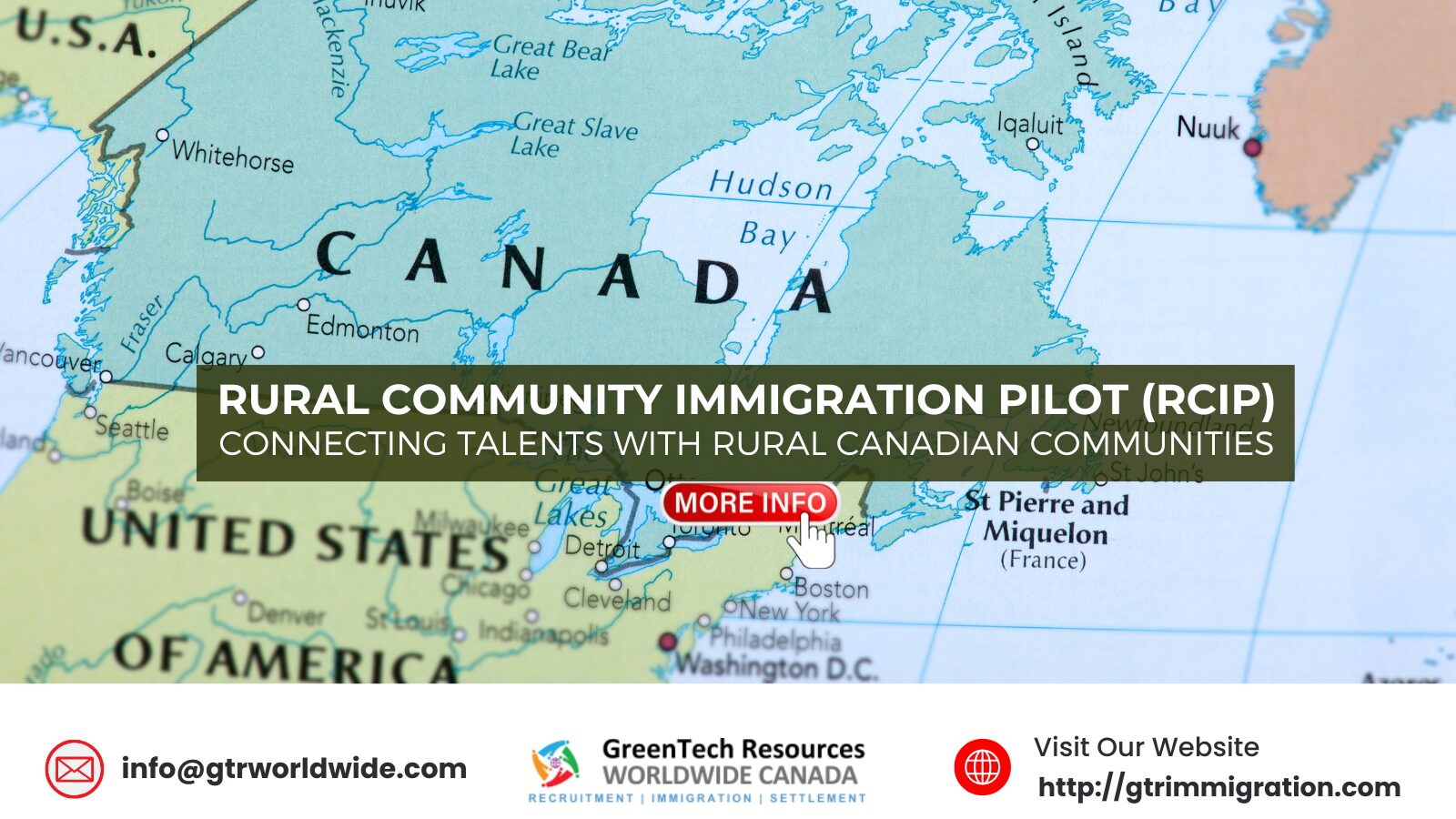
  • Rural Community Immigration Pilot (RCIP) – Connecting Talents with Rural Canadian Communities

    Rural Community Immigration Pilot (RCIP) – Connecting Talents with Rural Canadian Communities

    On January 30, 2025, Canada launched the Rural Community Immigration Pilot (RCIP), a new pathway to permanent residence aimed at addressing labor shortages in rural and remote communities. This initiative is part of a broader effort to attract skilled workers to areas outside major urban centers, ensuring balanced regional development across the country.

    Overview of the RCIP

    The RCIP offers a direct route to permanent residence for foreign nationals who:​

    • – Have a genuine, full-time, permanent job offer from an employer in one of the participating communities.​
    • – Possess at least one year of continuous work experience (minimum 1,560 hours) in the past three years.​
    • – Meet minimum language requirements: Canadian Language Benchmark (CLB) 6 for NOC 0 and A jobs, CLB 5 for NOC B, and CLB 4 for NOC C and D.​
    • – Hold a Canadian high school diploma or an equivalent foreign credential, verified through an Educational Credential Assessment (ECA).​
    • – Demonstrate intent to reside in the community and show proof of settlement funds.​
    • – Obtain a recommendation from a local economic development organization.

    Participating Communities

    Fourteen communities across Canada have been selected to participate in the RCIP:​

    • Nova Scotia: Pictou County​

    • Ontario: North Bay, Sudbury, Timmins, Sault Ste. Marie, Thunder Bay​

    • Manitoba: Steinbach, Altona/Rhineland, Brandon​

    • Saskatchewan: Moose Jaw​Northern

    • Alberta: Claresholm​

    • British Columbia: West Kootenay, North Okanagan Shuswap, Peace Liard

    Each community is represented by a local economic development organization that collaborates with Immigration, Refugees and Citizenship Canada (IRCC) to identify labor gaps, designate trustworthy employers, and recommend suitable candidates for permanent residence. ​

    Application Process

    Prospective applicants should:​

    1. Secure a job offer from a designated employer in one of the participating communities.​

    2. Obtain a recommendation from the community’s economic development organization.​

    3. Apply for permanent residence through IRCC.​

    Some communities may also offer an optional work permit to allow candidates to start working while their permanent residence application is being processed.

  • How EOI Innovations Are Transforming Provincial Nominee Processes

    How EOI Innovations Are Transforming Provincial Nominee Processes

    Recent developments in Canada’s Provincial Nominee Programs (PNPs) have seen a significant shift towards the implementation of Expression of Interest (EOI) systems, fundamentally altering the selection process for provincial nominees. This transformation aims to enhance efficiency, transparency, and alignment with regional labor market needs.

    Understanding the EOI System

    An EOI system requires prospective immigrants to submit a preliminary application indicating their interest in a specific PNP. Applicants provide details about their skills, work experience, education, and other relevant factors. Based on this information, candidates are assigned a score and ranked accordingly. Those with the highest scores receive invitations to apply for provincial nomination, streamlining the selection process and ensuring that provinces can target individuals who best meet their economic and demographic needs.

    Provincial Adoption of EOI Systems

    Several provinces have recently adopted or refined their EOI systems:

    • Ontario: The Ontario Immigrant Nominee Program (OINP) has integrated an EOI system for various streams, allowing the province to manage intake and select candidates who align with its labor market requirements. ​

    • Saskatchewan: The Saskatchewan Immigrant Nominee Program (SINP) utilizes an EOI system for its International Skilled Worker category, enabling the province to invite candidates with the most suitable qualifications. ​

    • Manitoba: Regular EOI draws are conducted under the Manitoba Provincial Nominee Program (MPNP), where candidates in the EOI pool are invited to submit full applications based on their scores and the province’s specific needs.

    Impact on Provincial Nominee Selection

    The shift to EOI systems has redefined provincial nominee selection in several ways:

    • Efficiency: By pre-screening candidates through EOIs, provinces can expedite the processing of applications, reducing wait times and administrative burdens.​

    • Targeted Selection: EOI systems allow provinces to prioritize candidates who possess skills and experience that are in high demand within their jurisdictions, ensuring a better match with local labor market needs.​

    • Transparency: Applicants have a clearer understanding of the selection criteria and their standing in the pool, leading to a more predictable and fair process.

    How to enhance your chances in the EOI Era

    To improve your prospects under the EOI system, consider the following strategies:​

    • Research Provincial Criteria: Each province has unique selection criteria. Tailor your application to meet the specific demands of the province you are interested in.​

    • Improve Language Proficiency: Higher language test scores can significantly boost your EOI ranking.​

    • Gain Relevant Work Experience: Experience in occupations that are in demand in a particular province can enhance your eligibility.

    • Secure a Job Offer: A valid job offer from an employer in the province can increase your chances of nomination.​

    By focusing on these areas, you can strengthen your profile and increase the likelihood of receiving an invitation to apply.

    To support these changes, Immigration, Refugees and Citizenship Canada (IRCC) has proposed regulatory amendments aimed at improving the efficiency of the PNP assessment process and eliminating redundancies. These amendments are designed to facilitate the seamless integration of EOI systems across various provincial programs. ​

    In summary, the adoption of EOI systems across Canada’s PNPs represents a significant evolution in the country’s immigration landscape, aligning provincial selection processes more closely with regional economic needs and enhancing the overall efficiency of the immigration system.

  • How to Maximize Your CRS Score for Canadian Immigration

    How to Maximize Your CRS Score for Canadian Immigration

    The Comprehensive Ranking System (CRS) is a points-based mechanism employed by Immigration, Refugees and Citizenship Canada (IRCC) to evaluate and rank candidates in the Express Entry pool for immigration to Canada. The CRS assesses factors such as age, education, work experience, language proficiency, and other criteria to determine eligibility for permanent residency.

    Key Components of the CRS

    • Core/Human Capital Factors: These include age, education, language skills in English and/or French, and Canadian work experience.​

    • Spouse or Common-Law Partner Factors: If applicable, the education, language proficiency, and Canadian work experience of your spouse or common-law partner.​

    • Skill Transferability Factors: Combinations of education, foreign work experience, and language proficiency that can enhance your adaptability.​

    • Additional Points: Factors such as having a sibling in Canada, proficiency in French, or receiving a provincial nomination.

    As of March 25, 2025, IRCC has removed points for job offers from the CRS calculation.

    Updates in 2024–2025

    • – Job offers no longer give extra CRS points (as of March 2025)
    • – Category-based draws now target specific occupations (like healthcare, STEM, trades, or French-speaking candidates)
    • – French and Canadian work experience are now more valuable than ever.

    Strategies to Improve Your CRS Score

    • Enhance Language Proficiency: Achieving higher scores in language tests like IELTS can significantly boost your CRS score. For instance, obtaining Canadian Language Benchmark (CLB) level 9 or higher can maximize points in this category. ​

    • Pursue Further Education: Completing additional educational credentials can increase your score. For example, obtaining a one-year post-secondary certificate in addition to your existing degree can add points. ​

    • Gain More Work Experience: Accumulating additional years of work experience, particularly Canadian work experience, can enhance your score. ​

    • Obtain a Provincial Nomination: Receiving a nomination from a Canadian province or territory can add 600 points to your CRS score, effectively guaranteeing an Invitation to Apply (ITA) for permanent residency. ​

    • Leverage Spousal Factors: If you have a spouse or common-law partner, their language proficiency, education, and work experience can contribute additional points to your overall score. ​

    Every upgrade counts—make sure your Express Entry profile reflects your latest improvements.