Category: GTR Immigration

  • Saskatchewan Introduces New Immigration Pathways for Agriculture and Healthcare Sectors

    Saskatchewan Introduces New Immigration Pathways for Agriculture and Healthcare Sectors

    Agriculture and Healthcare

    In a strategic move to address critical labor shortages and boost economic growth, Saskatchewan has launched new targeted immigration pathways specifically designed for the agriculture and healthcare sectors: Agriculture Talent Pathway & Health Talent Pathway. These initiatives aim to attract skilled professionals and address the pressing needs of these vital industries, ensuring the province’s continued prosperity and development.

    Why Focusing on Agriculture and Healthcare?

    By introducing these targeted immigration pathways, Saskatchewan seeks to:

    1. Address Labor Shortages: Both sectors have long faced challenges in finding qualified professionals. The new pathways aim to fill these gaps with skilled workers who can contribute immediately to these critical fields.

    2. Support Economic Growth: By ensuring that key industries have the necessary workforce, Saskatchewan can continue to grow its economy and remain competitive on a national and global scale.

    3. Enhance Quality of Life: Attracting skilled professionals to these sectors will improve the quality of services available to residents, from better healthcare services to enhanced agricultural productivity.

    Details of the New Immigration Pathways

    The Agriculture Talent Pathway is designed for foreign workers with experience in farming and related occupations. Applicants must have at least one year of full-time work experience within the past 3 years or 6 months of continuous employment with a Saskatchewan-based employer who has issued a job approval letter.

    To be qualified, candidates must meet basic educational requirements and score at least Canadian Language Benchmark (CLB) 4.

    The Health Talent Pathway is focused on healthcare professionals. Applicants must demonstrate 6 months of full-time work experience (780 hours) with a Saskatchewan employer offering a job approval letter. They must also meet the minimum language requirement of CLB 5 in English or French.

    Both pathways are open to candidates who live outside Canada or those with legal status in the country, though refugee claimants are not eligible.

    The Health Talent Pathway also offers the potential for Express Entry applicants to qualify for permanent residency under the the non-Express Entry sub-category.

    These 2 new immigration pathways: The Agriculture Talent Pathway and The Health Talent Pathway represent a proactive approach to addressing critical labor shortages and supporting economic growth. By focusing on these essential industries, Saskatchewan is taking significant steps to ensure its continued prosperity and enhance the quality of life for its residents.

  • GTR Immigration Success Clients in Aug 2024

    Aug 2024

    Success Clients in August 2024

    Congratulation. Thank you for trusting GTR Immigration & GreenTech Resources
    Vietnamese Client – 28 Aug 2024
    Applied PEI nomination on April 11,2024
    Received PEI Nomination on May 10,2024
    Applied Work Permit for main applicant, Open Work Permit for spouse and Visitor Visa for child on July 08, 2024
    Approved Work Permit & Visitor Visa for child on August 28, 2024
    Original Passport Request - Success client
    Original Passport Request - Success client
    Original Passport Request - Success client
    Indian Client – 12 Aug 2024
    Visitor record 12 Aug 2024
    Visitor Record - Success Client
    Indian Client – 9 Aug 2024
    Applied for SINP Nomination on Nov 22, 2023
    Received SINP Nomination on Jan 19, 2024
    Applied Work Permit for main applicant, Open Work Permit for spouse and for child on Mar 25, 2024
    Received Work Permits, Study Permit for child on Aug 08, 2024
    Success client
    Success client

    Next success client is you

    Contact us

    Contact us for detailed discussion.

    Tel: +1 855 477 9797

  • Breaking News: Canada visitor work permit policy ends From Within the Country

    Breaking News: Canada visitor work permit policy ends From Within the Country

    Breaking News: Canada visitor work permit policy ends From Within the Country

    In a significant policy shift, the Canadian government has officially ended the temporary measure that allowed visitors in Canada to apply for work permits without leaving the country. As of August 28, 2024, this change—announced by Immigration, Refugees and Citizenship Canada (IRCC)—comes into immediate effect, bringing an end to a measure first introduced during the COVID-19 pandemic.

    Overview of the Temporary Policy

    The now-terminated policy, initially rolled out in August 2020, was designed as a temporary solution to the unprecedented challenges posed by the pandemic. During that time, international travel was severely restricted, and many visitors who had entered Canada on temporary visas found themselves unable to leave when their visas expired. In response, the Canadian government introduced a policy allowing these visitors to apply for work permits while still in the country, bypassing the need to return to their home country to submit applications.

    The measure also extended to individuals who had previously held work permits but had switched to visitor status after the expiration of their permits. This allowed them to remain legally employed while awaiting the processing of their new work permits, alleviating the burden on both employers and workers during a period of uncertainty.

    Why Was the Policy Introduced?

    At the height of the pandemic, Canada, like many other countries, implemented strict travel restrictions to limit the spread of the virus. This left thousands of foreign nationals stranded in Canada. In addition to travel issues, there were also economic concerns. Canadian businesses were facing severe labor shortages, especially in industries like healthcare, construction, and technology, where skilled workers were in high demand.

    To address these challenges, the Canadian government took swift action by introducing a policy that allowed visitors and those with expired work permits to apply for new work permits without the need to leave the country. This offered a streamlined way for visitors and businesses to navigate the situation, providing relief during a critical time. Many companies relied on foreign workers to maintain their operations, and the policy was seen as a positive move to support Canada’s economy and job market.

    Why Did the Canadian Government End the Policy?

    Although the policy was originally set to remain in place until February 28, 2025, the IRCC has decided to bring it to an early close. Several factors contributed to this decision:

    1. Immigration Integrity: One of the primary reasons for terminating the policy was the need to protect the integrity of Canada’s immigration system. Reports surfaced that some individuals were misusing the policy to obtain unauthorized work in Canada. The IRCC noted that the policy had become vulnerable to exploitation, which undermined the very purpose it was meant to serve.
    2. Manage Temporary Resident Population: Another key concern was managing the rising number of temporary residents. Canada has seen a substantial influx of foreign nationals in recent years, and the government wants to ensure that pathways to residency and work permits are properly regulated. Ending the policy allows authorities to better control who is eligible to apply for work permits and ensure that applicants follow the established procedures.
    3. Post-Pandemic Conditions: With the global pandemic receding, the COVID-19 travel restrictions that justified the introduction of the policy are no longer relevant. Flights to and from Canada have returned to normal, and visitors can now leave the country without the obstacles that were in place during the pandemic.
    4. Abuse of the System: There were increasing reports that individuals and organizations were taking advantage of the policy to circumvent traditional immigration processes. Some visitors were using the policy as a loophole to work in Canada without meeting the usual eligibility requirements, which could result in labor market discrepancies and unauthorized employment.
    5. Economic and Labor Market Considerations: While the policy helped fill labor gaps during the pandemic, Canada’s labor market has since stabilized. The government wants to ensure that the workers entering the market do so through legitimate channels. By ending the policy, the IRCC aims to balance the needs of Canadian businesses with the protection of Canadian workers’ rights.

    What Does the Policy Change Mean for Visitors in Canada?

    The termination of the visitor-to-work permit application policy means that visitors currently in Canada can no longer apply for a work permit from within the country. They will need to follow the standard procedure, which typically requires them to return to their home country and submit their application from there.

    However, the IRCC clarified that all applications submitted before August 28, 2024, will continue to be processed under the previous guidelines. This provides some relief to those who applied before the policy change but were still waiting for a decision on their application.

    Impact on Canadian Employers

    For Canadian employers, particularly those in industries heavily reliant on foreign labor, this policy shift could present new challenges. Sectors like agriculture, hospitality, construction, and technology have frequently turned to foreign workers to fill gaps in their labor force. The ability to hire foreign nationals already within Canada provided an additional layer of flexibility for employers struggling to fill positions quickly.

    With the policy now ended, employers may face delays in hiring foreign workers, as prospective employees will need to go through the traditional channels of applying for a work permit from outside of Canada. This could lengthen the hiring process, potentially causing a labor shortage in certain sectors that depend on foreign workers.

    Challenges for Prospective Workers

    For foreign nationals who were planning to apply for a work permit from within Canada, the end of this policy marks a significant hurdle. Many individuals may now face longer processing times and additional travel expenses as they are required to leave the country to submit their applications.

    Additionally, visitors who were hoping to transition to a work permit status while in Canada will now need to adjust their plans. This could affect their ability to secure employment in Canada or remain in the country for an extended period. For those with expired visitor visas, leaving Canada to apply for a work permit might be even more complex due to varying re-entry restrictions or visa requirements.

    A Return to Pre-Pandemic Rules

    The end of the visitor-to-work-permit policy represents a return to pre-pandemic immigration regulations. Before this policy, foreign nationals had to apply for a work permit through designated processes outside of Canada, either from their country of origin or another eligible location.

    For many, this shift means a return to the more bureaucratic processes that existed before the pandemic. The flexibility that the temporary policy provided has now been removed, and the application procedures are likely to be more rigid going forward.

    Key Takeaways

    • Policy Change Date: As of August 28, 2024, visitors in Canada can no longer apply for work permits without leaving the country.
    • Policy Introduction: Originally introduced in August 2020 to respond to pandemic-related travel restrictions, this temporary measure was set to expire in February 2025, but it has been terminated early.
    • Impact on Applicants: Those who had planned to apply for a work permit from within Canada will now need to exit the country to do so.
    • Economic Considerations: The policy shift may have broader implications for Canadian employers, particularly in industries reliant on foreign workers.
    • Immigration Integrity: The IRCC has emphasized the need to protect the immigration system from abuse, which was one of the key reasons for ending the policy early.
    conclusion

    This decision by the Canadian government to end the visitor-to-work-permit policy marks a significant moment in the country’s immigration history. While it was initially created to address the unique circumstances of the pandemic, the government has determined that it is no longer necessary and may be subject to misuse.

    Looking forward, both prospective foreign workers and Canadian employers will need to adapt to these changes, with a renewed focus on adhering to Canada’s existing immigration rules and regulations. Although this policy change will likely bring new challenges, it also underscores Canada’s commitment to maintaining a transparent, fair, and secure immigration system that benefits both its citizens and those seeking to work and live in the country.

    As the landscape of Canadian immigration continues to evolve, stakeholders will need to stay informed of any new developments and adjust their strategies accordingly to navigate the post-pandemic regulatory environment.

    By focusing on integrity, compliance, and fairness, Canada remains committed to upholding the values that have long defined its immigration policies, even as the world continues to recover from the impacts of COVID-19.

  • Canada Stops Processing of Low-Wage LMIAs in Certain Cities

    Canada Stops Processing of Low-Wage LMIAs in Certain Cities

    In a major policy shift, the Canadian government has announced it will stop processing Low-Wage Labour Market Impact Assessments (LMIAs) for the Temporary Foreign Worker Program (TFWP) in select cities. This decision, unveiled on August 26th, 2024, marks a significant change in the management of foreign labor in Canada and aims to address ongoing labor market and economic concerns.

    Effective September 26, 2024, the Government of Canada will implement the following changes to the TFW Program:

    1. Labour Market Impact Assessment:  The government will refuse to process LMIAs in the Low-Wage stream for census metropolitan areas where the unemployment rate is 6% or higher. However, exceptions will be made for jobs in sectors critical to food security, including primary agriculture, food processing, and fish processing, as well as in construction and healthcare.
    2. 10% Cap on Foreign Workers: employers will not be permitted to hire more than 10% of their total workforce through the Temporary Foreign Worker Program (TFWP). Exceptions will apply to the same critical sectors mentioned above.
    3. Reduced Employment Duration: The maximum duration of employment for workers hired through the Low-Wage stream will be reduced to one year from the previous two-year limit.

    A Plan To Invest In Local Workforce

    Minister of Employment, Workforce Development, and Official Languages, Randy Boissonnault, emphasized the importance of investing in the domestic workforce.

    “The Temporary Foreign Worker program was designed to address labour market shortages when qualified Canadians were not able to fill those roles. Right now, we know that there are more Canadians qualified to fill open positions. The changes we are making today will prioritize Canadians workers and ensures Canadians can trust the program is meeting the needs of our economy.”

    Employers are now encouraged to explore domestic talent pools, including young people, newcomers, and persons with disabilities.  

    The government also urges employers to invest in retraining and upskilling their current employees to adjust to the changing economic conditions. 

    The government has pledged to monitor labour market conditions closely and make further adjustments to the TFW Program as needed.  

    A review of the program is planned within the next 90 days, which may lead to modifications in the high-wage stream, sectoral exceptions, and processing of existing LMIA applications. 

    The decision to halt processing low-wage LMIA applications in certain cities marks a notable shift in Canada’s approach to managing its labor market and temporary foreign workforce. While the policy aims to enhance job opportunities for Canadian workers and encourage investment in local talent, it also presents new challenges for employers who will need to adapt to these changes.

  • Unlocking Your Future With The Student Direct Stream (SDS)

    Are you an international student looking to pursue your higher education in Canada? The Canada Student Direct Stream (SDS) program might be the key to making your dream a reality. This streamlined pathway offers faster processing times and is designed to make studying in Canada more accessible for eligible students.

    What is the Canada Student Direct Stream (SDS)?

    The Canada Student Direct Stream (SDS) is a special initiative by the Government of Canada aimed at expediting the study permit application process for international students from select countries. The program is designed to simplify and speed up the application process, allowing students to receive their study permits faster, often within 20 calendar days if all requirements are met.

    Eligibility Criteria for SDS

    To qualify for the SDS program, applicants must meet specific criteria:

    1. Country of Citizenship: SDS is available to students from certain countries, including Antigua and Barbuda, Brazil, China, Colombia, Costa Rica, India, Morocco, Pakistan, Peru, Philippines, Senegal, St. Vincent and the Grenadines, Trinidad and Tobago, and Vietnam.

    2. Educational Institution: You must have an acceptance letter from a designated learning institution (DLI) in Canada. The institution must be on the list of DLIs approved by the Canadian government.

    3. Proof of Funds: You need to show proof of sufficient funds to cover your tuition fees, living expenses, and return transportation. This usually involves providing a have obtained a Guaranteed Investment Certificate (GIC) of $20,635 CAD; which helps demonstrate your financial stability.

    4. Language Proficiency: You must meet the language requirements set by the institution. IRCC accepts the following English language tests:

      • – IELTS Academic or IELTS General Training score of at least 6.0 in each language skill level (reading; writing; listening; and, speaking);
      • – CELPIP General (minimum score of CLB 7);
      • – CAEL (minimum score of 60);
      • – Pearson Test of English (PTE) Academic (minimum score of 60); and/or
      • – Educational Testing Service (ETS) TOEFL iBT Test (minimum score of 83).
    5. Medical Exam and Police Certificate: Depending on where you’re applying from, you may need to get a medical exam or police certificate. To get faster processing through the Student Direct Stream, you must include these with your application (if you need them). If you don’t, we won’t process your application faster.

    How to Apply

    Step 1: Get organized. Gather all the required documents, including your letter of acceptance from a DLI, proof of payment for tuition & International Student GIC, language test results, medical tests and police reports, and the provincial attestation letter.

    Step 2: Apply online. Once you have all your documents in order, you can apply online through the Immigration, Refugees, and Citizenship Canada (IRCC) website. It’s a good idea to take time and double-check your application for accuracy and completeness before submitting it. Incomplete or inaccurate applications may result in delays or even rejection.

    Step 3: Track your application status. After submitting your application, you can track its status online using the application number provided by IRCC. While processing times may vary, SDS applications typically receive faster processing (as little as 20 days) compared to regular study permit applications.

    The Canada Student Direct Stream (SDS) program is a fantastic opportunity for eligible international students to expedite their study permit application and embark on their educational journey in Canada. By meeting the requirements and taking advantage of the benefits offered by SDS, you can look forward to a smoother and more efficient process as you prepare to study in one of the world’s most welcoming countries.

  • Alberta Advantage Immigration Program (AAIP) to Apply New EOI System Starting September 30, 2024

    Alberta Advantage Immigration Program (AAIP) to Apply New EOI System Starting September 30, 2024

    The Alberta Advantage Immigration Program (AAIP) has announced a major update to its Expression of Interest (EOI) system, set to take effect on September 30, 2024. This change is designed to enhance the efficiency and effectiveness of the immigration process for those seeking to settle in Alberta.

    The EOI system is a points-based selection mechanism where candidates express their interest in immigrating to Alberta.

    After submitting an EOI, candidates will enter a selection pool similar to the Express Entry pool.

    Periodically, AAIP will draw candidates from this pool, inviting those with the highest rankings and who meet provincial labor market needs to apply for immigration.

    Key Features of the New EOI System

    1. Continuous Intake: The new EOI system allows for continuous submissions and processing of EOIs. Candidates can express their interest at any time without waiting for specific dates.
    2. Ranking and Selection: Candidates are ranked based on various factors, including skills, work experience, and their potential to meet province’s economic needs, and higher-ranked candidates are more likely to receive invitations to apply.
    3. Labor Market Focus: The selection process is closely aligned with the labor market requirements to ensure that the province attracts individuals who can significantly contribute to its economy.

    With the introduction of the EOI system, the program will not proceed with the remaining monthly application acceptance dates for 2024. This ensures a smooth transition to the new system, allowing for continuous intake and processing of EOIs.

    The new EOI system is designed to be more dynamic and responsive, potentially reducing waiting times for candidates and better addressing the province’s labour market needs.

    This approach is expected to:

    • Enhance Efficiency: Continuous intake allows the program to manage application volumes more effectively, reducing processing times.
    • Targeted Selection: Candidates with skills and experience in high-demand sectors have a better chance of selection, aligning with Alberta’s economic priorities.
    • Transparency and Fairness: The points-based system ensures a transparent and fair selection process, where candidates are ranked and selected based on their merits.

    Alberta Advantage Immigration Preparing for the New System

    Prospective immigrants aiming to settle in Alberta should prepare for the new EOI system by:

    1. Understanding the Points Criteria: Familiarize yourself with the factors influencing your ranking, such as work experience, education, language proficiency, and adaptability.
    2. Enhancing Your Profile: Improve your chances of selection by enhancing your qualifications, gaining additional work experience, or improving your language skills.
    3. Staying Informed: Keep up to date with the latest information and updates from the AAIP to understand the province’s evolving labour market needs and how they might impact your application.

    The launch of the new EOI system on September 30, 2024, marks a significant milestone for Alberta’s immigration program.

    By allowing for continuous intake and targeted selection based on labour market needs, the AAIP aims to attract skilled individuals who can contribute to the province’s economic growth.

    Prospective immigrants should take proactive steps to understand and adapt to the new system, enhancing their profiles to increase their chances of being invited to apply.

    With this new system, Alberta continues to demonstrate its commitment to welcoming skilled immigrants and fostering a dynamic, prosperous economy.

  • Atlantic Immigration Program – How To Apply

    The Atlantic Immigration Program is a pathway to permanent residence for skilled foreign workers and international graduates from a Canadian institution who want to work and live in 1 of Canada’s 4 Atlantic provinces—New Brunswick, Nova Scotia, Prince Edward Island or Newfoundland and Labrador.

    About the Atlantic Immigration Program (AIP)

    The Atlantic Immigration Program is designed to address labor market gaps in Canada’s Atlantic provinces. This program aims to attract skilled workers and international graduates to contribute to the economic growth and vitality of these provinces. The AIP has proven to be a major success for immigrants, employers, and the Atlantic region.

    It continues to provide permanent resident status to thousands of immigrants each year, which addresses the needs of local employers, and promotes population, labour force, and economic growth.

    How It Works

    The Atlantic Immigration Program is an employer-driven program that facilitates the hiring of foreign nationals. All principal applicants arriving in Canada under the program must have a job offer from a designated employer and an individualized settlement plan for themselves and their family.

    Once a designated employer finds a applicant who meets their employment needs and the program criteria, that employer will need to first offer them a job. Employers do not need to go through the process of obtaining a Labour Market Impact Assessment (LMIA).

    Once the applicant has accepted the job, the employer will connect the applicant with a designated settlement service provider organization for a needs assessment and to develop a settlement plan. Employers will also support the long-term integration of the new immigrant and his or her family, if applicable, so they can reach the goals of their settlement plan once they arrive in Canada.

    Employers that need to fill a job vacancy quickly will have access to a temporary work permit, so that the applicant and his or her family can come to Canada as soon as possible. In order to obtain this work permit, applicants will need:

    • – A valid job offer;
    • – A letter from the province; and
    • – A commitment to apply for permanent residence within 90 days of the temporary work permit application.

    Who can apply for Atlantic Immigration Program (AIP)?

    To be eligible for the AIP applicant must:

    • – Have qualifying work experience unless you are an international student that graduated from a recognized post-secondary institution in Atlantic Canada.
    • – Meet the educational criteria
    • – Meet the language criteria
    • – Having enough settlement funds. Applicant does not need to show proof of settlement funds if they are already living and working in Canada with a valid work permit.

    1. Work Experience

    Applicant must have put in at least 1,560 hours during the past five years. If you worked 30 hours a week, you would have put in this amount of time in a year. This work should be at one of the six National Occupational Classification (NOC) 2021 Training, Education, Experience and Responsibilities (TEER) categories.

    2. International Graduate – No Work Experience

    International graduates do not need to meet the requirements for work experience. Although they must have a degree, diploma, certificate, or trade or apprenticeship certification that requires at least 2 years of study and is from one of the four Atlantic provinces (New Brunswick, Nova Scotia, Prince Edward Island, or Newfoundland and Labrador).

    Applicant must have been a full-time student for the entirety of your studies and have lived in one of the following provinces for at least 16 months in the two years before graduating from your programme in one of the four provinces.

    3. Educational Requirements for AIP

    • If applicant has a job offer in the NOC 2021 TEER 0 or 1 category, they must possess a Canadian postsecondary degree or equivalent from outside Canada or one that is at least one year long.
    • Applicant must have a Canadian high school diploma or equivalent from outside Canada to be hired in the NOC 2021 TEER 2, 3 or 4 categories.

    4. Language Requirements

    • CLB/NCLC 5 for TEER 0, 1, 2 or 3
    • CLB/NCLC 4 for TEER 4

    Applicant must submit to IRCC the test results obtained from a designed language testing organization. The test results must be less than 2 years old when you apply.

    4. Settlement funds

    • – If the applicant already lives in Canada and working with a valid work permit, they don’t need to show proof of funds.
    • – For all other applicants, they need to show that they have enough money to support themselves and their family when they get to Canada.

    The table below shows the minimum amount you need to immigrate to Canada.

    Minimum amount of money you need to immigrate to Canada based on the size of your family

    Updated June 3, 2024

    Number of family members Funds applicant needs
    (in Canadian dollars)
    1 $3,672
    2 $4,572
    3 $5,620
    4 $6,824
    5 $7,740
    6 $8,729
    7 $9,718
    If more than 7 people, for each additional family member, add $989


    The Atlantic Immigration Program provides a valuable opportunity for skilled workers and international graduates to establish themselves in Canada’s vibrant Atlantic provinces. By meeting the eligibility criteria, securing a job offer, and navigating the application process effectively, you can embark on a new chapter of your career and life in one of Canada’s most welcoming regions.

  • Canadian Permanent Residency: How To Obtain Canada PR in 2024

    Canadian Permanent Residency

    Canadian Permanent Resident (PR) status is a coveted immigration status granted to foreign nationals who have been authorized to live and work in Canada indefinitely. This status is distinct from Canadian citizenship but offers many of the same benefits, making it an attractive option for individuals and families looking to settle in Canada.

    Benefits of Obtaining the Canadian Permanent Residency (PR)


    1. Work and Live Anywhere in Canada: As a permanent resident, you have the right to live, work, or study anywhere in Canada. This flexibility allows you to choose your place of residence based on your preferences and opportunities.

    2. Access to Healthcare and Social Services: Permanent residents are eligible for provincial healthcare coverage, which is one of the most comprehensive healthcare systems globally. They also have access to various social services and benefits offered by the Canadian government.

    3. Protection Under Canadian Law: Permanent residents are protected under Canadian law and the Canadian Charter of Rights and Freedoms, ensuring they have rights similar to those of Canadian citizens.

    4. Pathway to Canadian Citizenship: Permanent residents who meet certain residency requirements can apply for Canadian citizenship. This pathway involves residing in Canada for at least 1,095 days within the five years preceding the date of their application.

    5. Sponsor Family Members: Permanent residents can sponsor their eligible family members to become permanent residents, promoting family reunification.

    How to Obtain Canadian Permanent Residency:


    There are several pathways to obtain Canadian Permanent Residency, including:

    • Express Entry System: This system manages applications for skilled workers under three categories: Federal Skilled Worker Program, Federal Skilled Trades Program, and Canadian Experience Class. Applicants create an online profile and are ranked based on factors such as age, education, work experience, and language proficiency.

    • Provincial Nominee Programs (PNPs): Each Canadian province (except Quebec) has its own PNP that nominates individuals who meet specific criteria and intend to settle in that province.

    • Family Sponsorship: Canadian citizens and permanent residents can sponsor their eligible family members, such as spouses, partners, dependent children, parents, and grandparents, for permanent residence.

    • Business Immigration Programs: Canada offers various programs designed to attract individuals with entrepreneurial experience or those who can make substantial investments in the Canadian economy.

    Requirements for Canadian Permanent Residency:


    To qualify for Canada Permanent Residence, applicants generally need to meet criteria related to:

    • Education and Work Experience: Demonstrating skills and qualifications that align with Canadian economic needs.
    • Language Proficiency: Providing proof of language proficiency in English and/or French.
    • Admissibility: Meeting health and security requirements to ensure the safety and well-being of Canadian society.
    • Financial Stability: Demonstrating the ability to support oneself and any dependents upon arrival in Canada.

    Canadian Permanent Residency offers individuals and families the opportunity to establish themselves in a country known for its inclusivity, strong economy, and high quality of life. Whether through skilled immigration programs, family sponsorship, or business investment, obtaining PR status is a significant milestone towards building a future in Canada. With careful planning and adherence to immigration guidelines, applicants can navigate the process successfully and embark on a new chapter in one of the world’s most welcoming nations.

  • Calgary Alberta Ranked Among the Top 10 Most Livable Cities in the World for 2024

    Calgary Alberta Ranked Among the Top 10 Most Livable Cities in the World for 2024

    Calgary Alberta Ranked Among the Top 10 Most Livable Cities in the World

    In an impressive achievement, Calgary, the largest city in Alberta, Canada, has secured its place among the top 10 most livable cities in the world for 2024, according to the renowned Economist Intelligence Unit (EIU) Global Livability Index. This prestigious ranking highlights Calgary’s outstanding performance in several crucial criteria: stability, healthcare, environment, education, and infrastructure. This recognition is not only a testament to the city’s ability to provide a high standard of living but also a reflection of its commitment to sustainability, innovation, and community well-being.

    In this article, we’ll delve deeper into the factors that have contributed to Calgary’s success and how each aspect of the city’s governance and infrastructure plays a vital role in making it one of the most desirable places to live globally.

    1. Stability: Calgary’s Reliable Foundation

    One of the most significant factors contributing to Calgary’s high livability score is its stability. The city enjoys a secure political and economic environment that fosters a sense of safety and reliability for residents and businesses alike.

    Political Stability

    Calgary’s political environment is known for being stable and efficient. This is crucial for maintaining the rule of law, public safety, and a transparent, predictable governance system that residents and businesses can trust. Alberta’s provincial government and Calgary’s local authorities work in harmony to ensure that the city remains a secure place for individuals, families, and enterprises to thrive. Policies that support economic growth, public safety, and community welfare have been pivotal in maintaining this political stability.

    Economic Strength

    The city’s economy is both resilient and diverse, contributing significantly to the overall sense of security. While Calgary has traditionally been known as a hub for Canada’s energy sector, it has diversified over the years into various industries including technology, finance, and real estate. The strong local economy not only supports job stability but also makes Calgary an attractive destination for skilled professionals seeking career growth in industries like tech and finance.

    The low unemployment rate and ample job opportunities also contribute to the city’s appeal. Even during global economic fluctuations, Calgary’s ability to sustain economic resilience has been impressive. These factors, combined with a relatively low crime rate, make the city a safe and dependable place to live and work.

    2. Healthcare: World-Class Medical Services

    Healthcare is another area where Calgary shines, offering high-quality medical services and a comprehensive healthcare system that ensures residents have access to excellent care.

    Advanced Medical Facilities

    Calgary is home to some of the best healthcare facilities in Canada, such as the renowned Foothills Medical Centre and Alberta Children’s Hospital. These institutions provide residents with access to specialized medical treatments, state-of-the-art technology, and world-class healthcare professionals. Calgary’s healthcare system is equipped to handle everything from routine check-ups to advanced surgical procedures, ensuring that residents receive top-notch care.

    The city’s emphasis on healthcare accessibility means that residents can avail a wide range of medical services, including preventive healthcare, family medicine, mental health services, and specialized treatments for chronic illnesses. This commitment to healthcare excellence is a major factor contributing to the city’s high livability rating.

    Preventive Healthcare Initiatives

    In addition to the healthcare infrastructure, Calgary places a strong focus on public health initiatives. These programs encourage preventive healthcare measures, promoting healthier lifestyles among the population. The city frequently organizes public health campaigns to raise awareness about the importance of exercise, nutrition, and mental health, contributing to the overall well-being of the community.

    3. Environment: A Gateway to Natural Beauty

    Calgary’s environment is one of the city’s greatest assets. Situated close to the majestic Rocky Mountains, the city offers stunning natural landscapes and a multitude of outdoor activities. Calgary’s commitment to environmental sustainability further enhances its reputation as a livable city.

    Proximity to Nature

    One of Calgary’s unique features is its close proximity to the Rocky Mountains, offering residents and visitors alike easy access to breathtaking natural beauty. Whether it’s hiking in Banff National Park, skiing in the winter, or simply enjoying the scenic views, Calgary provides a perfect balance between urban living and outdoor adventure. The opportunity to engage in outdoor activities like hiking, biking, skiing, and camping is one of the factors that make the city appealing to nature enthusiasts.

    Sustainability Efforts

    Calgary is also recognized for its dedication to environmental sustainability. The city has implemented several green initiatives designed to reduce its carbon footprint and preserve its natural surroundings. Calgary is home to many parks and green spaces, including Fish Creek Provincial Park and Prince’s Island Park, which contribute to the city’s green landscape and offer recreational spaces for residents.

    The city’s recycling and waste management programs, as well as its investment in renewable energy, are part of a broader strategy to make Calgary a sustainable city for future generations. These efforts are instrumental in improving air quality and reducing the environmental impact of urban living.

    4. Education: A Hub for Learning and Development

    Calgary’s educational system is another standout feature that has contributed to its high ranking on the global livability index. The city offers world-class education from primary to post-secondary levels, ensuring that residents have access to quality academic opportunities.

    Reputable Universities and Schools

    The University of Calgary and Mount Royal University are two of the most prominent institutions in the city, offering a wide array of undergraduate, graduate, and professional programs. These universities are recognized both nationally and internationally for their academic excellence, research contributions, and diverse range of extracurricular activities. Calgary’s education system is not only about academic achievement but also about fostering innovation and creative thinking.

    Calgary also has an excellent public and private school system, which ensures that children receive a high-quality education from an early age. The city’s schools emphasize both academic excellence and personal development, providing students with opportunities to engage in sports, arts, and other extracurricular activities. This comprehensive approach to education ensures that students are well-rounded and prepared for future success.

    Accessibility and Support for Students

    One of the strengths of Calgary’s education system is its accessibility. The city provides various scholarship programs and financial aid opportunities, ensuring that higher education is attainable for all students regardless of their financial background. Additionally, Calgary’s public schools offer various support services to help students succeed academically and socially.

    This focus on inclusivity and support ensures that every student has the opportunity to thrive, making Calgary a city where education is highly valued and accessible to all.

    5. Infrastructure: A Modern and Efficient City

    Infrastructure is the backbone of any city’s livability, and Calgary has invested heavily in building modern, efficient systems to accommodate its growing population. From transportation to urban development, Calgary’s infrastructure is designed to provide convenience, connectivity, and sustainability.

    Efficient Public Transportation

    Calgary’s public transportation system is one of the most efficient in Canada. The city’s transit network includes buses and the CTrain, a light rail system that connects various parts of the city. The CTrain, in particular, is a popular mode of transport due to its reliability and eco-friendly design. Public transit not only makes commuting convenient for residents but also reduces traffic congestion and lowers the city’s carbon footprint.

    In addition to public transportation, Calgary has invested in infrastructure projects that improve roadways, making it easier for both residents and businesses to navigate the city. The well-maintained roads, highways, and bike lanes promote seamless connectivity, ensuring that the city remains accessible to all.

    Urban Development and Smart City Initiatives

    Calgary is also committed to urban development and sustainability. The city has embraced smart city initiatives that leverage technology to improve urban living. These initiatives focus on everything from energy-efficient buildings to smart traffic management systems. By investing in such forward-thinking projects, Calgary ensures that its infrastructure can support its growing population while maintaining environmental sustainability.

    Urban development in Calgary is not just about expansion; it’s also about creating livable, community-oriented spaces. The city’s development plans prioritize green spaces, public amenities, and recreational facilities, enhancing the overall quality of life for residents.

    Conclusion: Calgary’s Place Among the World’s Most Livable Cities

    Calgary’s inclusion in the top 10 most livable cities globally for 2024 is a testament to its exceptional quality of life, driven by its stability, healthcare, environment, education, and infrastructure. The city combines the advantages of a strong economy with a commitment to sustainability, making it an ideal destination for those seeking a fulfilling and balanced lifestyle.

    From its stable political and economic environment to its breathtaking natural landscapes and world-class healthcare system, Calgary offers a comprehensive package of benefits for residents. The city’s focus on education, efficient infrastructure, and environmental sustainability further solidifies its reputation as one of the world’s best places to live.

    As Calgary continues to grow and evolve, its emphasis on innovation, community well-being, and environmental stewardship will ensure that it remains a top destination for both residents and visitors seeking a high quality of life. Whether you’re considering moving to Calgary or are already a resident, the city’s inclusion in the top 10 most livable cities globally is a reflection of its ongoing commitment to providing an exceptional living experience.

    By maintaining its strengths and embracing new opportunities, Calgary is set to continue its rise as a global leader in livability for years to come.

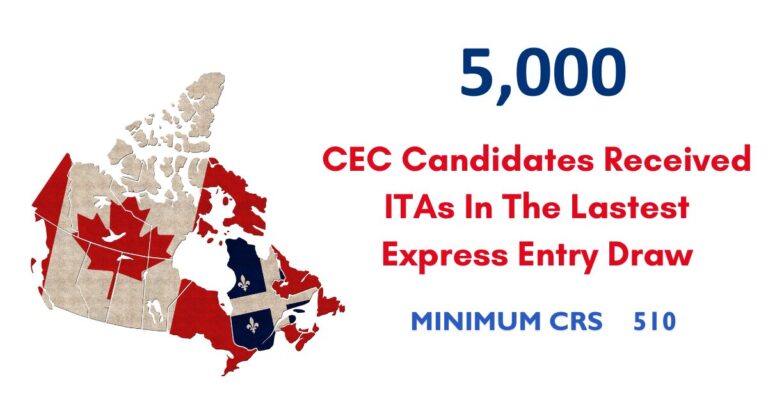
  • 5,000 Canadian Experience Class Candidates

    5,000 Canadian Experience Class Candidates

    5000 CEC Candidates Receives ITAs in the Latest Express Entry Draw – Minimum CRS 510

    In a significant move to address labor market needs and streamline immigration processes, the Canadian government has recently conducted a major draw under its Express Entry system. On July 31, 2024, Canada issued 5,000 invitations to candidates under the Canadian Experience Class (CEC) stream, marking a notable shift in the country’s immigration strategy.

    Details of the Latest Draw

    In this recent draw, the CRS score threshold was set at 510, 5 points lower than the previous CEC draw conducted on July 17, and 12 points lower than the CEC draw conducted on May 31st. This reduction in the CRS score reflects Canada’s ongoing efforts to prioritize skilled workers with Canadian work experience, a critical asset in addressing local labor market demands.

    Implications for Canadian Experience Class Candidates

    The Canadian Experience Class is a popular pathway for individuals who have already gained work experience in Canada and are looking to transition to permanent residency. This latest draw is particularly beneficial for candidates who have been working in Canada and seeking a more stable immigration status.

    Looking Ahead

    The recent draw reflects Canada’s ongoing commitment to adapting its immigration system to meet the needs of its economy and workforce. By lowering the CRS score and issuing a large number of invitations, IRCC is facilitating the integration of skilled workers into the Canadian economy and addressing critical labor market demands.

    For those affected by this draw, it represents a valuable opportunity to advance their immigration goals. Staying informed and proactive will be key for anyone looking to take advantage of future Express Entry draws.